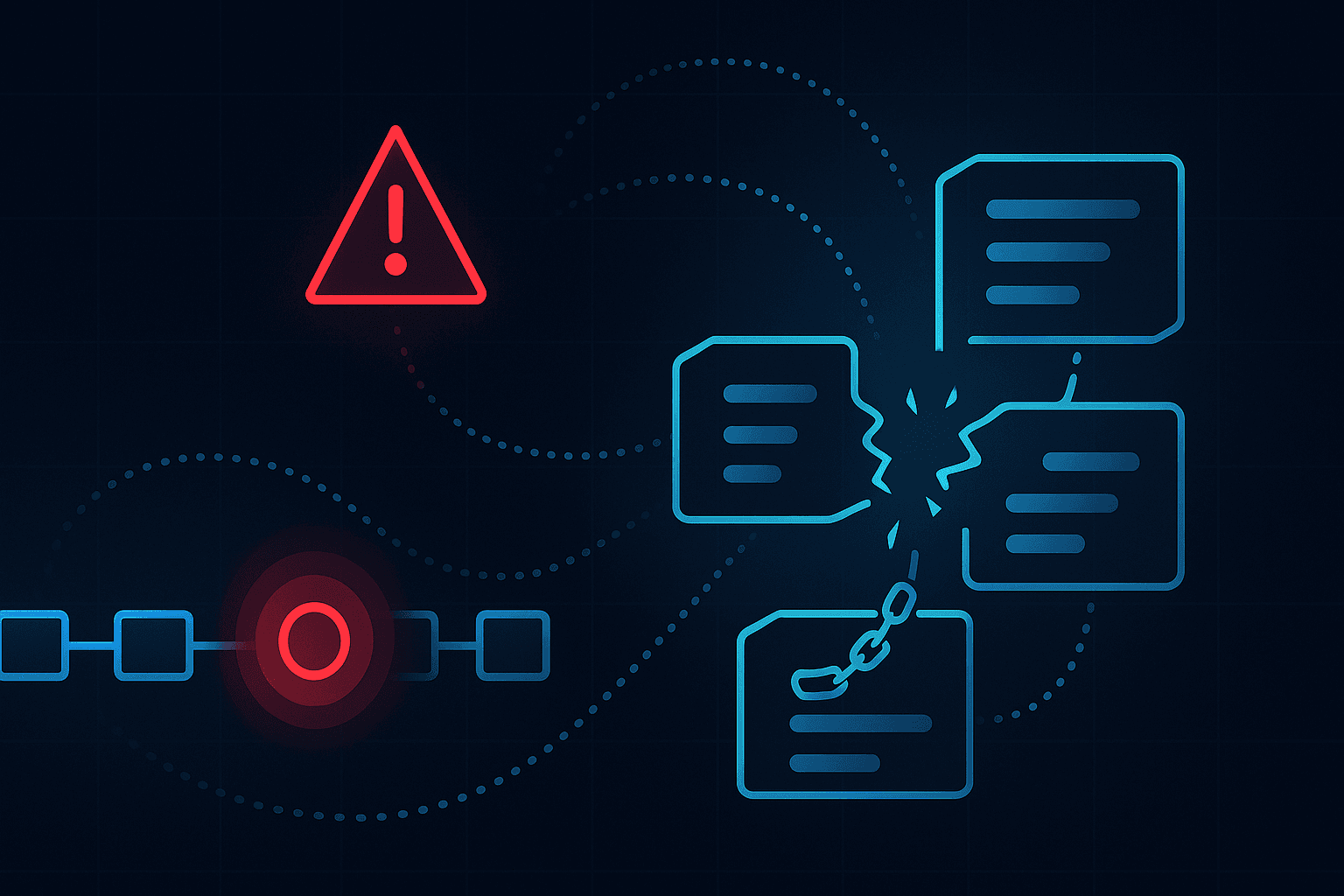
The Cost of Poor Audit Logging: Real Incidents and What They Teach Us
Understanding the financial, operational, and reputational impact of weak logging practices
A deep analysis of real-world security incidents made worse by missing or incomplete audit logs, and the lessons organizations can learn to prevent similar failures.
The Cost of Poor Audit Logging: Real Incidents and What They Teach Us
Audit logs are often viewed as a technical detail that can be sorted out later. Many organizations defer building strong logging practices until after a product launches, or when an auditor finally asks for evidence. Unfortunately, the true cost of weak audit trails only becomes apparent when something goes wrong. When an incident occurs, missing or incomplete logs can turn a manageable event into an expensive forensic exercise with long-term consequences.
This article breaks down real-world examples of how poor audit logging has contributed to breaches, compliance failures, legal disputes, and operational downtime. Understanding these cases helps teams avoid the mistakes that led others into crisis.
Why Audit Logs Matter in High Pressure Situations
Audit logs are not just technical records. They provide the foundational evidence for answering core questions:
- Who accessed a system
- What actions they took
- When those actions occurred
- Which assets were affected
- Where the actions originated
When these answers are missing, inaccurate, or inconsistent, organizations face immediate risk. A weak audit trail affects:
- Security investigations
- Customer communications
- Regulatory reporting
- Insurance claims
- Internal accountability
- Legal defensibility
Without trustworthy logs, leadership must make decisions based on guesswork, not evidence. For many companies, this leads to over reporting, under reporting, or making incorrect assumptions about what happened.
Incident 1: Unauthorized Admin Activity Without Traceability
A mid sized SaaS company discovered that several customer accounts had been modified without approval. Some users were granted administrative privileges while others had access revoked. Customers complained about being locked out or noticing suspicious changes to data.
The operations team attempted to trace the modifications, but their existing logging system only captured high level system events. There were no records of which admin performed the updates, through which interface, or from which IP address. This left the company unable to confirm:
- Whether the actions were performed by a legitimate but careless staff member
- Whether an admin account had been compromised
- Whether the changes were automated or manual
- Whether attackers had accessed customer environments
The company had to assume the worst and notify all impacted customers, reset all admin accounts, and issue broad communications about a possible breach.
The cost
- Direct cost: more than 300 hours of engineering and support time
- Indirect cost: more than 15 percent customer churn in the following quarter
- Reputational damage: lost deals where potential clients cited the incident
- Compliance impact: delayed SOC 2 audit due to insufficient evidence trails
Lessons learned
Audit logs must capture administrative actions with full detail. High privilege activity is one of the most sensitive areas of an organization. Without visibility into privileged actions, investigations become speculative and slow.
Incident 2: A Ransomware Attack With No Forensic Trail
A financial services company was hit with ransomware that encrypted internal file servers. When attempting to understand the attack, the security team discovered that only partial logs were available. Their logging pipeline had been designed to collect application metrics, not structured security events. Attackers had spent more than 20 days inside the network, but the company had no authoritative timeline.
Critical missing fields included:
- Lateral movement attempts
- Privilege escalations
- Failed login attempts
- Successful credential misuse
- Administrator changes
- Firewall rule edits
Without reliable logs, the company could not prove to regulators that sensitive data had not been exfiltrated.
The cost
- Forensic consultants: USD 500,000+
- Regulatory reporting: mandatory disclosure under financial oversight laws
- Customer trust: significant inbound inquiries and cancellations
- Insurance: cyber insurance claim reduced due to lack of logs
- Downtime: more than 10 days of business disruption
Lessons learned
Organizations that do not record high signal security events cannot determine the root cause of an incident. This forces investigators to reconstruct events manually, dramatically increasing cost and delay.
Incident 3: A Misconfigured Microservice That Deleted Customer Data
A technology company running a large microservices architecture deployed a faulty update that triggered a cascade of delete operations. Several services communicated with each other to perform scheduled maintenance, but a small code change caused those services to mistakenly mark customer data as expired.
When teams attempted to understand the scope of the issue, they found that logs were scattered across dozens of services. Because each service had its own logging format and retention policy, reconstructing a timeline required:
- Comb through logs stored locally in containers
- Export aggregated logs from multiple clusters
- Manually unify timestamps
- Evaluate partial logs from services that rolled over too quickly
- Infer relationships between services without correlated IDs
This incident highlighted not just gaps in logging, but also the fragility of non centralized audit practices in distributed systems.
The cost
- Direct engineering hours: more than 1,200 hours
- Permanent loss of data for more than 200 customers
- Refund requests and compensation costs
- Delays in the next product release due to re architectural work
- Mandatory review triggered by enterprise clients
Lessons learned
Microservices require unified, consistent, tamper proof audit logs that correlate events across services. Relying on local debug logs or inconsistent event models introduces significant gaps.
Incident 4: Legal Dispute Over Data Access Without Evidence
A large enterprise faced a legal challenge when a customer alleged that their data had been accessed without authorization. The company attempted to produce logs showing appropriate access controls, but the available logs:
- Were incomplete
- Recorded only successful logins, not data access
- Showed no record of internal administrative lookups
- Did not include IP addresses or user agent information
The absence of evidence was interpreted as evidence of absence. The court did not accept the organization’s assertions without logs to support them.
The cost
- Legal fees: more than USD 1 million
- Settlement payment
- Adverse media coverage
- Contract termination from a major enterprise client
Lessons learned
Audit trails are not only security tools but also legal records. Their absence weakens an organization’s ability to defend itself.
What These Incidents Teach Us
Several common themes emerge across these cases.
Lack of centralized audit trail storage
When logs are distributed across systems, containers, servers, and services, they become difficult to query and correlate. A centralized, tamper evident ledger is essential.
Insufficient event structure
Logs that contain unstructured or inconsistent data make investigations significantly more difficult.
Missing critical fields
Events without timestamp consistency, actor identity, resource identifiers, and origin details offer little value during incidents.
No immutability guarantees
Logs stored in locations where they can be modified or deleted cannot be relied upon for compliance or legal purposes.
Weak retention policies
Short retention windows create blind spots, especially for silent, long dwell attackers.
How Strong Audit Logs Reduce Risk
Strong audit logging offers several advantages:
- Evidence based incident response
- Faster containment
- Accurate regulatory reporting
- Lower forensic costs
- Increased customer trust
- Stronger legal defensibility
- Simplified compliance audits
These benefits compound over time and reduce both the frequency and severity of incidents.
How HyreLog Helps Organizations Avoid These Pitfalls
HyreLog was designed to address the exact problems highlighted in these cases. It provides:
- Immutable hash chained event storage
- Structured, consistent event schemas
- Workspace and project scoping for multi tenant environments
- Real time event ingestion
- Queryable timelines for investigations
- Export capabilities for audits and compliance
- Cryptographic verification for integrity
By centralizing audit trails into a dedicated, trustworthy layer, organizations avoid the operational and financial damage that poor logging creates.
Conclusion
Poor audit logging is not an inconvenience. It is a hidden liability that only becomes visible during moments of crisis. The organizations described in this article paid the price for incomplete, inconsistent, or fragile logs. Their experiences show how essential strong audit trails are for security, compliance, operations, and customer trust.
A dedicated audit trail system provides the visibility and evidence teams need. For companies seeking to reduce risk and increase confidence in their systems, investing in proper audit logging is not optional. It is foundational.